
Loft insulation is one of the simplest ways to keep a home warm, but it only works properly when it is fitted and looked after well. Some of the most common loft insulation mistakes are easy to make, whether the work is done as DIY or by an installer, and they can reduce how well the insulation performs or cause problems such as condensation.
In this guide we go through the mistakes worth knowing about, why they matter and how to avoid them, so you can check your own loft with confidence.
- The Energy Saving Trust recommends around 270mm of mineral wool loft insulation.
- Squashed or patchy insulation loses much of its effect.
- A cold loft still needs ventilation, so the eaves should never be blocked.
- Tanks, pipes, cables and downlights all need extra care.
Mistake 1: Not using enough insulation
Many lofts were insulated years ago to a depth that was normal at the time but falls well short today. The Energy Saving Trust recommends a depth of around 270mm for mineral wool loft insulation. If you can see the tops of the joists, there is almost certainly not enough.
The usual approach is to lay one layer between the joists and a second layer across them, at right angles. This covers the joists themselves, which would otherwise act as cold lines through the insulation, and helps close small gaps. Topping up an existing layer is often possible, as long as the old insulation is dry and in reasonable condition.
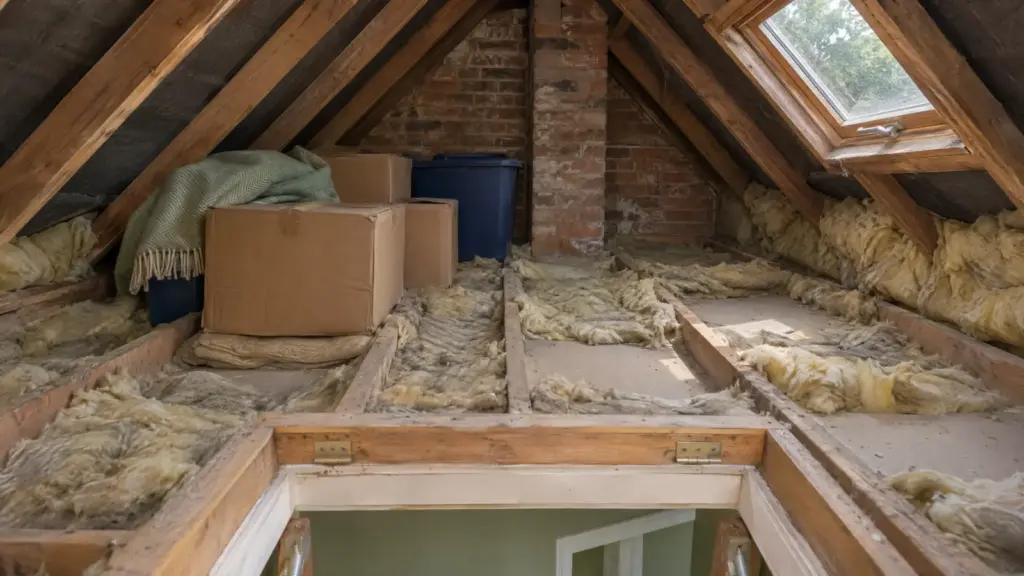
Mistake 2: Squashing the insulation
Mineral wool works by trapping air. When it is compressed, it traps less air and performs less well. It commonly gets squashed by:
- Boarding. Laying boards straight onto the joists over thick insulation.
- Storage. Boxes, cases and other items stacked directly on top.
- Foot traffic. Walking or kneeling on the insulation instead of a boarded route.
- Repairs. Insulation pushed aside or flattened during roof, wiring or plumbing work and never put back.
If you want to use your loft for storage, raised loft legs or a purpose-built platform keep the boards above the full depth of insulation. After any work in the loft, check that the insulation has been put back evenly.
Mistake 3: Blocking ventilation at the eaves
In most UK lofts, insulation sits at ceiling level and the roof space above stays cold. A cold loft needs a flow of air to carry away moisture, and much of that air comes in at the eaves. Pushing insulation tightly into the eaves can block it. Signs that a loft may not be ventilating well include:
- Condensation. Droplets on the underside of the roofing felt or on nails and fixings.
- Damp timbers. Dark staining or damp patches on rafters, joists or roof boards.
- Mould. Spots of mould on timber or stored belongings.
- A musty smell. Especially noticeable in colder months.
- Wet insulation. Insulation that feels damp or has clumped together.
- Covered vents. Eaves or ridge vents blocked by insulation or stored items.
Good to know: the insulation should still reach the edge of the loft so that the top of the walls is covered, but a clear air gap should be kept above it at the eaves. Eaves ventilation trays or spacers can help keep that gap open. Historic England’s guidance on cold roofs explains why this balance matters, especially in older homes.
Mistake 4: Leaving gaps and cold spots
Gaps in loft insulation let heat escape and create cold patches on the ceiling below, which can attract condensation. Common gaps are at the edges of the loft, around pipes and chimney breasts, near the hatch and wherever insulation has been cut to fit around obstacles.
Insulation should be laid snugly, with rolls butted up to each other and no gaps between layers. Where it meets pipes or other services, it should be cut carefully to fit around them rather than left short. A quick check with a torch, ideally on a cold day, will often show where coverage is missing.
Mistake 5: Forgetting the hatch, tank and pipes
Some of the most common loft insulation mistakes are about the details around the main insulation layer:
- The loft hatch. Insulate the top of the hatch and fit draught-proofing around its edges, or warm air will leak straight into the loft.
- The cold water tank. Wrap the top and sides of the tank, but leave the area underneath it uninsulated, so warmth rising from the rooms below can help stop the water freezing.
- Pipes. Water pipes in the loft should be lagged, as they will be colder once the loft floor is insulated.
You can read more about our loft insulation service, or see how our assessment works before any work is agreed.
Mistake 6: Covering cables and downlights
When electrical cables are buried under insulation they can run hot, which is a potential fire hazard. Where possible, cables should be lifted and clipped above the insulation rather than covered by it. Recessed downlights in the ceiling below also need care: insulation should not be laid over them unless they are designed for it or protected with suitable covers. If you are unsure, ask a qualified electrician to check before any insulation goes down.
Mistake 7: Ignoring existing moisture problems
Adding insulation will not fix a damp loft, and it can make some problems worse by making the roof space colder. Before insulating, deal with roof leaks, damaged flashing or slipped tiles, and make sure bathroom and kitchen extractor fans vent to the outside rather than into the loft. If the existing insulation is wet or mouldy, it is usually better to remove it and find the cause than to cover it with more.
Staying safe if you check your loft yourself
Checking or topping up loft insulation can be a DIY job, but lofts can be hazardous. Before you start:
- Only step on joists or secure boards, never between them, as the ceiling below will not take your weight.
- Use good lighting and take care around low rafters and nails.
- Wear gloves, long sleeves, eye protection and a dust mask when handling mineral wool.
- Leave electrical work to a qualified electrician.
- If the loft has spray foam, damp or damaged timbers, get advice before going further.
When to get professional help
A simple top-up in an accessible, dry loft can be straightforward. It is worth getting professional advice if your loft has signs of damp or condensation, poor access, a room in the roof, spray foam on the underside of the roof, or old insulation that may need removing. If your loft has spray foam, see our spray foam removal service. If you are in Berkshire, contact us to arrange an assessment or a quote.
Loft insulation mistakes: frequently asked questions
How thick should loft insulation be?
For mineral wool, the Energy Saving Trust recommends around 270mm, usually laid in two layers: one between the joists and one across them.
Can I put new insulation on top of old insulation?
Usually, yes, if the old insulation is dry, clean and in reasonable condition. Wet, mouldy or contaminated insulation should be removed and the cause dealt with first.
Should loft insulation go right into the eaves?
It should reach the edge of the loft to cover the top of the walls, but it should not block the ventilation gap at the eaves. Eaves trays or spacers help keep the airflow open.
Can I board over loft insulation?
Yes, but not by laying boards straight onto the joists over thick insulation. Raised loft legs or a platform keep the boards above the insulation so it is not squashed.
Is it safe to cover electrical cables with insulation?
Cables buried under insulation can run hot, which is a fire hazard. They should be lifted above the insulation where possible. If you are unsure, ask a qualified electrician.
Why is there condensation in my loft after insulating?
Insulating makes the loft colder, so poor ventilation or warm, moist air leaking up from the house can cause condensation. Check that the eaves are clear, the hatch is sealed and extractor fans vent outside.
This guide is general information for UK homeowners, written in our own words. It is not a survey or professional advice for your property. The organisations mentioned in this guide have not reviewed or endorsed it or our services. Read more homeowner guides, see the areas we cover, or find out more about our loft insulation service. You may also find our guide to the signs your home needs better insulation useful.