Not sure whether your home is losing more heat than it should? There are some common signs your home needs better insulation, and most of them are easy to spot once you know what to look for.
None of these signs on its own proves that insulation is the problem. Draughts, ventilation and heating issues can cause similar symptoms. Taken together, though, they can point you in the right direction. Below we explain seven signs of poor insulation, what each one may mean and what you can check yourself.
- Cold rooms, draughts and high bills are often the first signs that heat is escaping.
- Recurring condensation and mould can point to cold surfaces, but ventilation matters too.
- Some checks are easy to do yourself, such as looking at the depth of your loft insulation.
- An assessment can confirm where heat is being lost before you spend money.
1. Some rooms never feel warm
If certain rooms stay chilly even with the heating on, or upstairs feels noticeably colder than downstairs, heat may be escaping through the roof, walls or floor. Rooms with more outside walls, such as corner bedrooms, and rooms directly below the loft are often the first to feel it.
Uneven temperatures can also come from radiators that need bleeding or balancing, or heating controls that are not set up well, so it is worth ruling those out first.
2. You can feel draughts
Draughts are cold air finding its way in through gaps. They are not strictly an insulation problem, but they often go hand in hand with one, and they make a home feel colder than it should. Common places to check include:
- Windows and doors. Gaps around frames, letterboxes and keyholes.
- Floors. Gaps between floorboards and skirting on suspended timber floors.
- The loft hatch. An unsealed hatch lets warm air escape into the loft.
- Chimneys and pipework. Unused fireplaces and gaps where pipes or cables pass through walls.
Draught-proofing is usually one of the cheapest improvements you can make. Bear in mind that every home needs some fresh air, particularly rooms that produce a lot of moisture, like kitchens and bathrooms, and any room with an open fire. Leave air bricks, trickle vents and extractor fans clear.
3. Your heating bills seem high for your home
Energy bills depend on many things, including prices, the size of your home and how you use your heating, so a high bill alone does not prove there is an insulation problem. If your bills seem high compared with similar homes, or keep rising even though your habits have not changed, these checks can help:
- Your EPC. The recommendations section lists suggested improvements, such as loft or wall insulation.
- Your loft. Look at how deep the insulation is and whether it covers the whole loft floor.
- Your walls. Find out whether your walls are solid or cavity, and whether they are insulated.
- Your heating. Make sure the boiler is serviced and the controls and timings suit how you live.
- Your windows. Note whether windows are single or double glazed and whether any seals have failed.
- Your usage. Compare meter readings over time to spot genuine changes.
Tip: you can look up your home’s current EPC on GOV.UK using the “Find an energy certificate” service and your postcode (Scotland has its own register). The recommendations are general estimates rather than a full survey, but they are a useful starting point.
4. Condensation and mould keep coming back
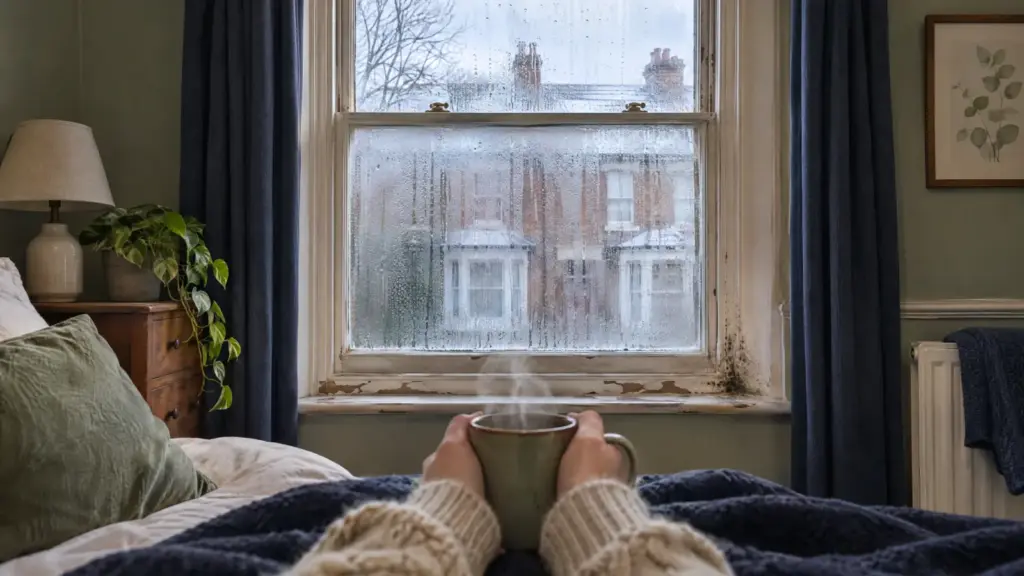
Condensation forms when warm, moist air meets a cold surface. Where walls or ceilings are poorly insulated, those surfaces can stay cold enough for water to settle, especially in corners, behind furniture and around windows. Over time this can lead to black mould.
Insulation can help by keeping internal surfaces warmer, but ventilation is just as important. Cooking, showering and drying clothes indoors all add moisture, so extractor fans and trickle vents need to be working and used. Government guidance on damp and mould makes clear that it can affect health, so persistent mould should not be ignored.
If damp is coming from outside, for example through a leaking gutter or damaged pointing, that needs fixing first. Adding insulation to a damp wall can make things worse, which is why any insulation work should start with a check for damp.
5. Your home cools down quickly
If your home feels warm while the heating is on but cools down soon after it switches off, heat is probably escaping faster than it should. A well-insulated home holds on to its warmth for longer. The heat is most likely to be escaping through:
- The roof. Energy Saving Trust figures suggest roughly a quarter of the heat in an uninsulated home escapes through the roof.
- The walls. Solid walls, common in homes built before the 1920s, lose heat more readily than insulated cavity walls.
- Floors and windows. Suspended timber floors and older single glazing can also let warmth escape.
You can read more about our loft insulation and cavity wall insulation services, or book a thermal imaging survey to see where your home is losing heat.
6. Frost or snow melts quickly on your roof
On a frosty or snowy morning, compare your roof with your neighbours’. If yours clears much faster, it can be a sign that heat is escaping through the roof. It is only a rough clue, as roof pitch, direction and sunlight all make a difference, but it is a quick and free check.
7. Your loft insulation is thin, patchy or missing
If you can get into your loft safely, take a look. The Energy Saving Trust recommends a depth of around 270mm for mineral wool loft insulation. If you can see the tops of the joists, there are gaps, or the insulation has been squashed under boxes or boarding, it is probably not doing its job. Older lofts were often insulated to 100mm or less, which falls well short of today’s recommendation. Only go into the loft if it is safe, with proper boarding and good lighting.
Spotted signs your home needs better insulation?
Seeing one or two of these signs does not automatically mean you need major work. A sensible next step is to find out where heat is actually being lost:
- Start with simple fixes such as draught-proofing and checking your heating controls.
- Check your loft insulation depth and the recommendations on your EPC.
- Deal with any damp, leaks or ventilation problems before adding insulation.
- Get an assessment before committing to wall insulation, as it is a bigger job.
- Ask for more than one written quote and check what each one includes.
Is there help with the cost?
Funding schemes for insulation change often, and what is available depends on where you live, your circumstances and your home’s energy rating. Check GOV.UK or your local council for current schemes before you commit. If you are in Berkshire and would like an assessment or a quote, contact us or see how our assessment works.
Frequently asked questions
How can I tell if my house is poorly insulated?
Common signs include cold rooms, draughts, high heating bills, recurring condensation and a home that cools quickly once the heating is off. Checking your loft insulation and your EPC recommendations is a good place to start.
Can poor insulation cause damp and mould?
It can contribute, because poorly insulated walls and ceilings stay colder and condensation forms more easily. Ventilation and sources of moisture matter just as much, so both need looking at.
Is it draughts or poor insulation?
Draughts are cold air coming in through gaps, while insulation slows heat escaping through the walls, roof and floors. Many homes benefit from both draught-proofing and insulation.
How do I check my loft insulation?
If it is safe to do so, measure the depth in a few places. The Energy Saving Trust recommends around 270mm for mineral wool. Look for gaps, squashed areas and an uninsulated loft hatch.
What is the cheapest way to improve insulation?
Draught-proofing and topping up loft insulation are usually among the lower-cost improvements. Wall insulation is a bigger project and is best planned after an assessment.
Do I need a survey before insulating?
For a simple loft top-up, a careful check is often enough. For wall insulation, or where there is damp, spray foam or a room in the roof, an assessment is a sensible first step.
This guide is general information for UK homeowners, written in our own words. It is not a survey or professional advice for your property. If you are worried about damp or mould affecting someone’s health, speak to a GP or other health professional. The organisations mentioned in this guide have not reviewed or endorsed it or our services. Read more homeowner guides, or explore all our services. You may also find our guide to what loft insulation is and why it matters useful.