Back to Services

Air pressure testing in Berkshire

Air pressure
testing.

Need an air tightness test in Berkshire? We measure how much air leaks through the walls, floors, roof and openings of your property, whether you are working towards Building Regulations sign-off on a new build or want to understand draughts in an existing home.

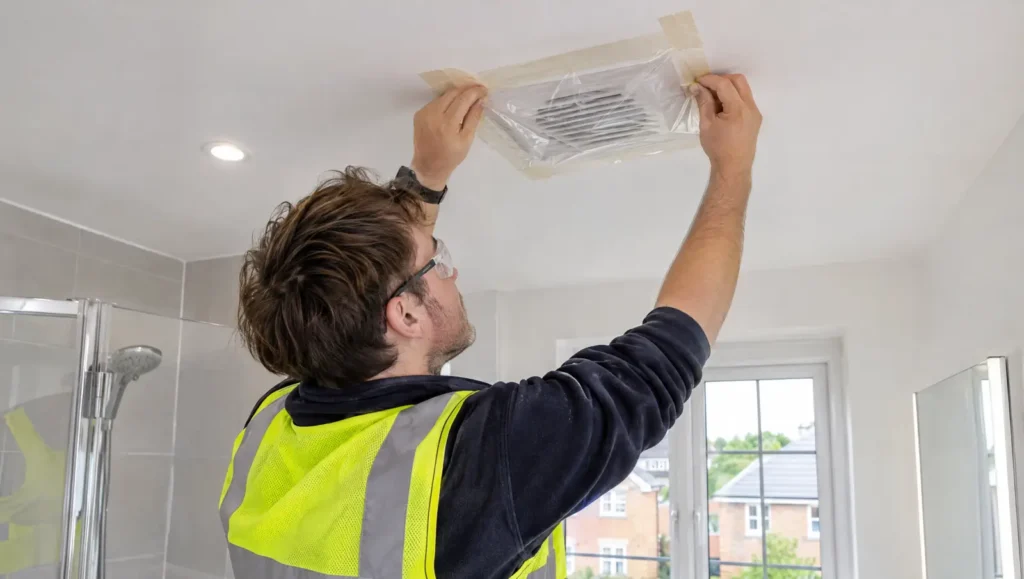
Tester temporarily sealing a bathroom extractor fan before an air tightness test
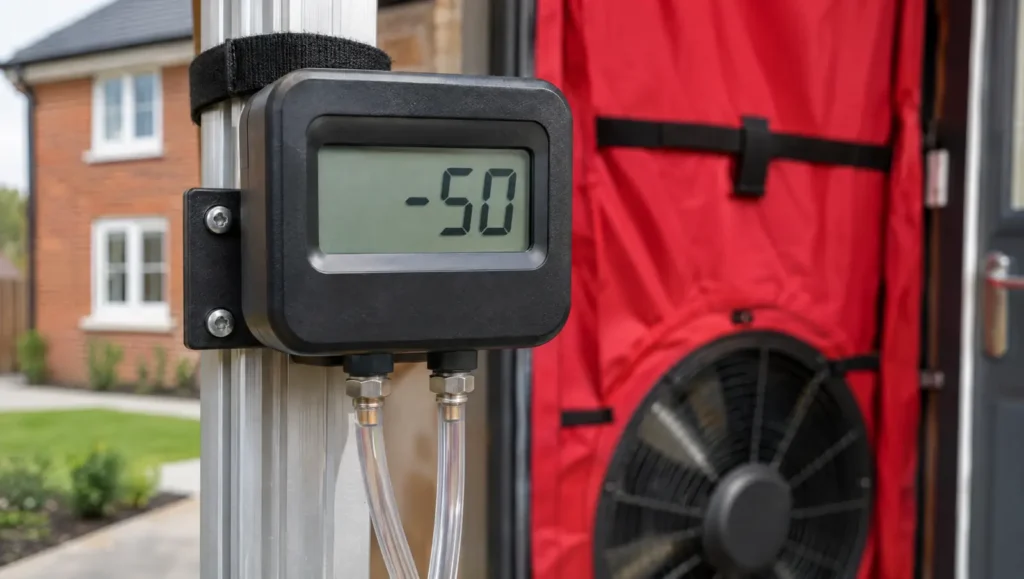
Digital pressure gauge connected to a blower door during an air tightness test
The service in brief

Find out how much air your home leaks.

Air pressure testing, also called air tightness testing, measures unintended air leakage through gaps and cracks in a building’s outer shell. Planned ventilation, such as extractor fans and trickle vents, is closed or sealed temporarily, so only uncontrolled leakage is measured.

New homes need an air tightness test as part of showing compliance with Part L of the Building Regulations, carried out by a suitably registered tester. For existing homes, a test can pinpoint draughts after refurbishment, and under RdSAP 10 a measured result from a suitably qualified tester can be used in an EPC. Pair it with a thermal imaging survey to see where air is getting in.

Air pressure testing may suit you if:

Key benefits

Why test air tightness?

Part L testing

New dwellings need a pressure test result to show Part L compliance. We confirm who will carry out the test and what paperwork you will receive.

Find the draughts

Uncontrolled air leakage adds to heating demand, and testing shows how leaky the building really is.

Ventilation balance

Very airtight homes need suitable ventilation. Results help plan the right balance for healthy indoor air.

EPC evidence

Under RdSAP 10, a result from a suitably qualified tester can be entered in an EPC. Any rating change depends on the property.

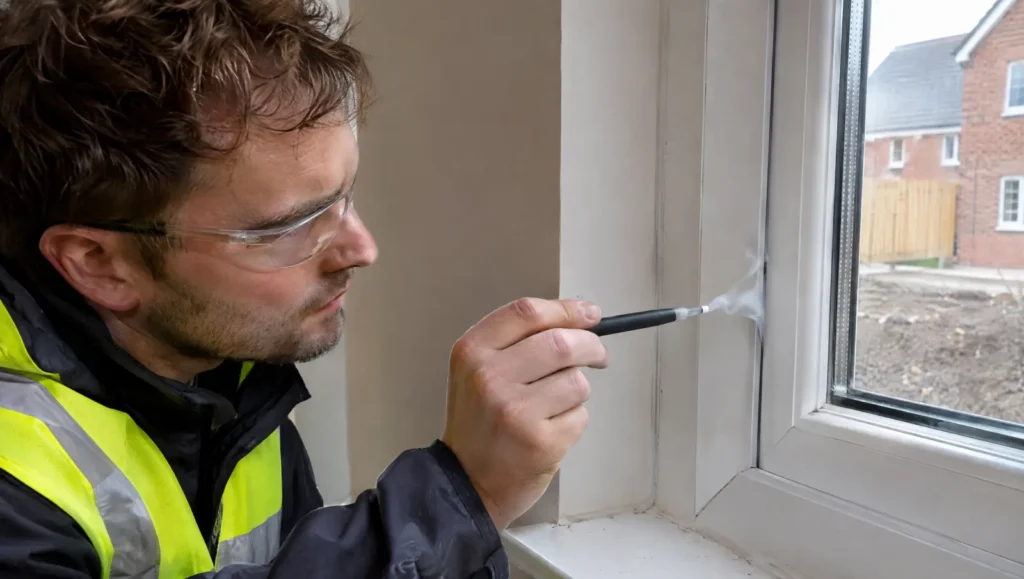
Smoke pencil revealing air leakage at a window frame during air pressure testing
Results are given as air permeability: the lower the figure, the more airtight the building.
Our process

A straightforward air tightness test.

1. Prepare the building

Windows, external doors and trickle vents are closed, and fans and other vents are temporarily sealed.

2. Set up the equipment

A calibrated fan is fitted in an external doorway, or a pulse unit is placed inside the property.

3. Run the test

The building is pressurised and the airflow is measured to calculate its air permeability.

4. Results explained

We explain the result and the paperwork you will need for building control or your EPC assessor.

FAQs

Air pressure testing questions.

Every home is different, so these are general answers. Your assessment will focus on your property. See the areas we cover across Berkshire.

Back to Services

Do I need an air test?

New-build homes need an air tightness test as part of Building Regulations Part L compliance. For existing homes, testing is optional but can help identify draughts and support an updated EPC.

The most common method uses a blower door: a fan fitted in an external doorway raises the pressure inside to 50 pascals and measures the airflow needed to hold it. A pulse test, which uses a short, controlled release of compressed air, is another accepted method.

Close windows, external doors and trickle vents, and leave internal doors open. We temporarily seal extractor fans and other vents, and confirm anything else needed when you enquire.

Results are given as air permeability in cubic metres per hour per square metre of envelope at 50Pa. A lower figure means a more airtight building, and we explain how your result compares with the target.

We help identify the main leakage routes so they can be sealed, and the building can then be retested. Testing early in a project makes any remedial work easier.

Get started

Need an air pressure test?

Tell us about your property or project and when you need the test, and we can arrange a suitable appointment in Berkshire.

Ask about air pressure testing
Let's talk about your home
Request a quote.

Tell us a little about your property and the help you need.

We only use these details to reply to your enquiry and arrange your assessment.

Read how we use and protect your details in our Privacy Policy.

Request a Quote
Thank you for your enquiry!

We've received your quote request successfully. Our team will be in touch with you shortly.